Safari Suites
Jnane Karwan — a private sanctuary where nomadic heritage is elevated into rarefied desert luxury.
Explorer Suite
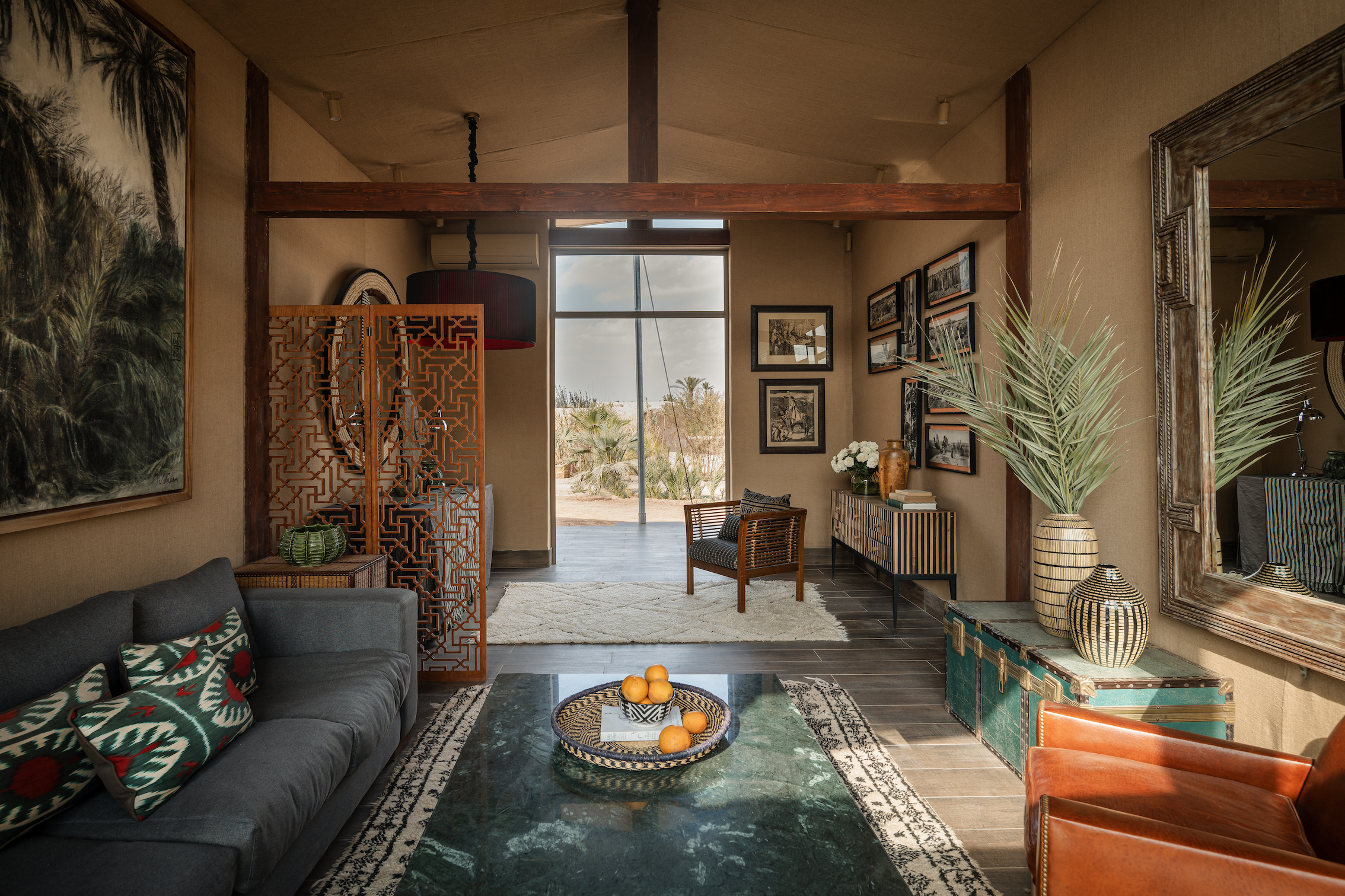
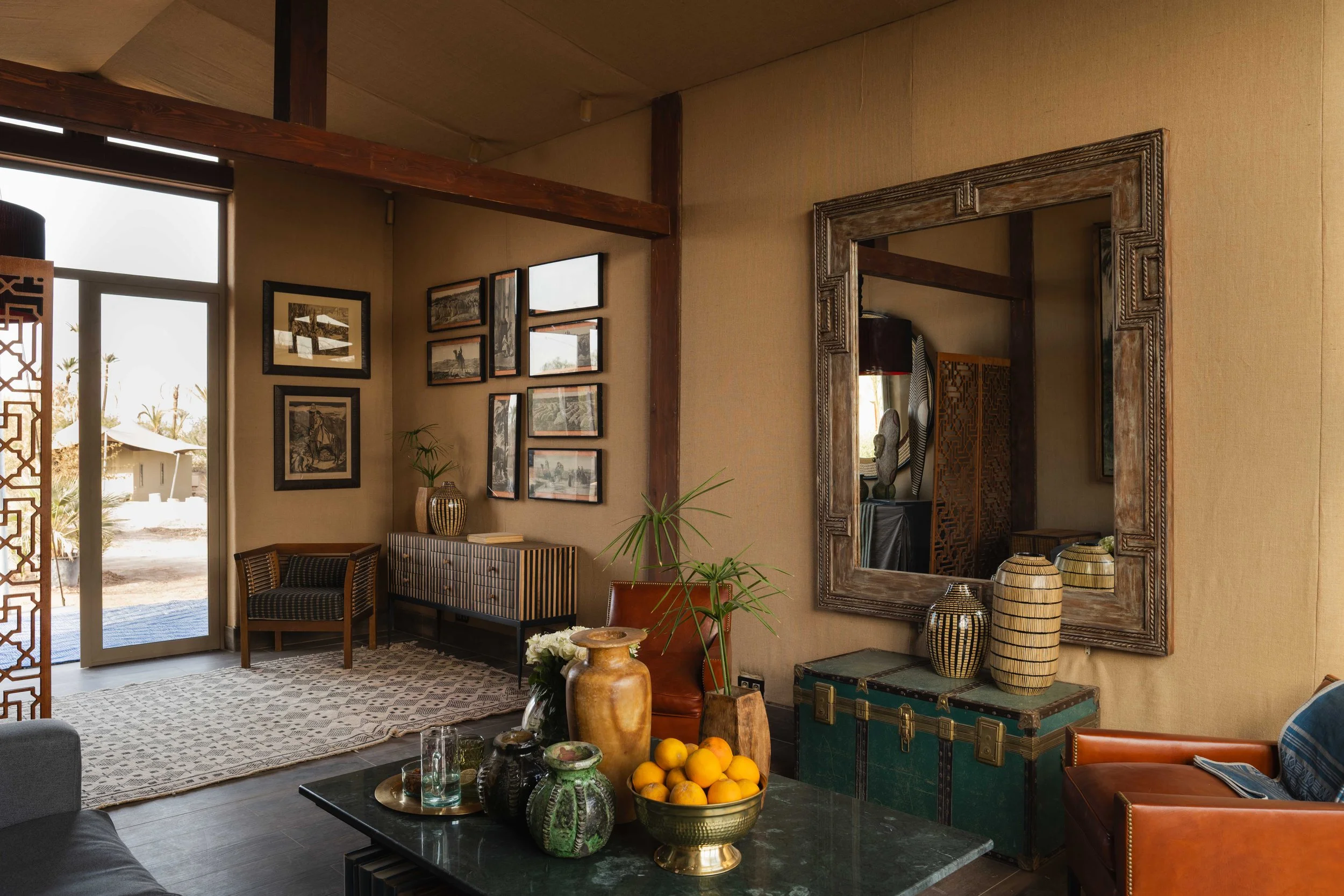
The Explorer suite is composed of two bedrooms, two bathrooms, and a salon. Meryanne conceived this space with references to the 1930s and 1940s, imagining the interior of a refined ethnographer or geographer who might have created, in the middle of the desert, a place of great comfort to return to at the end of the day.
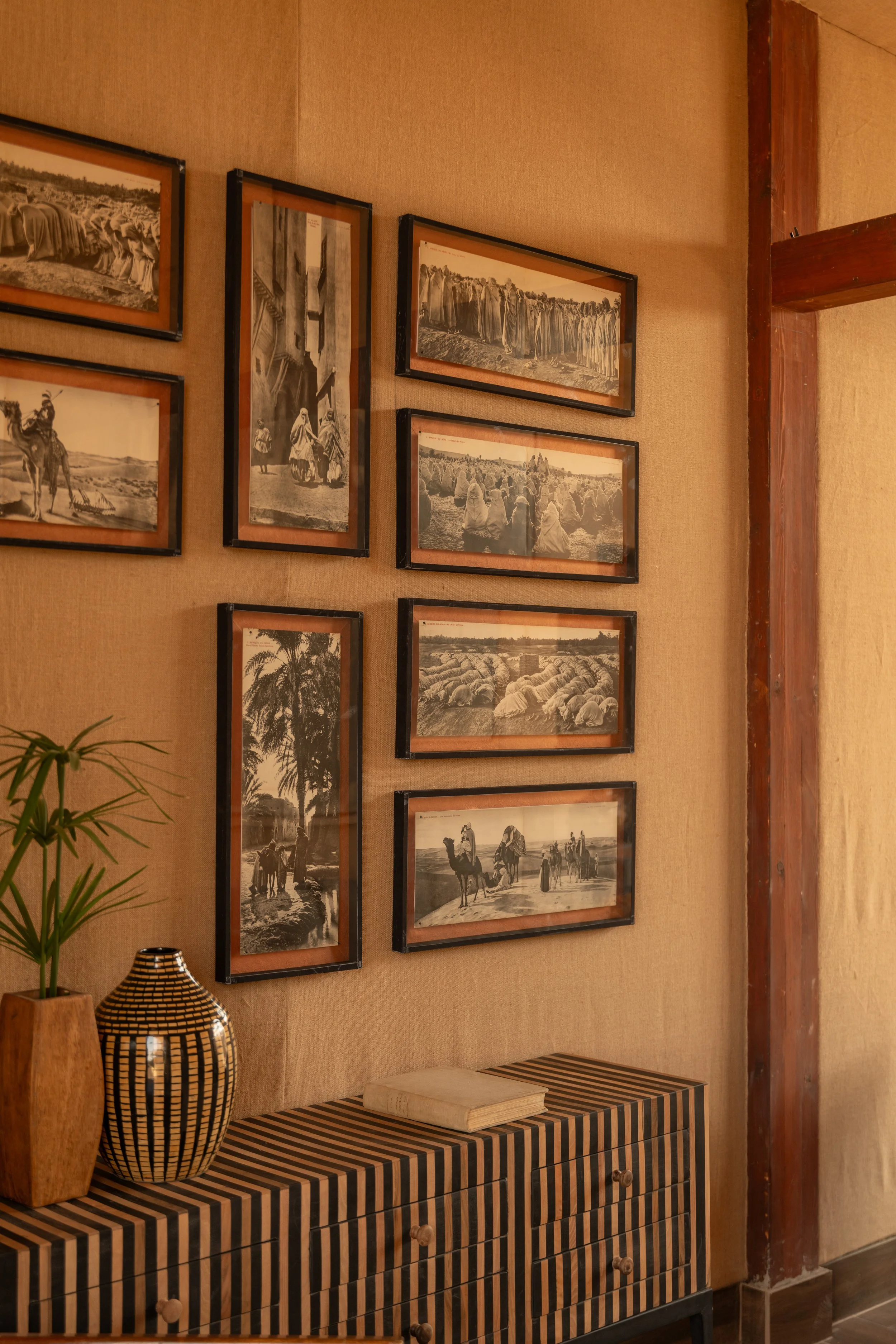
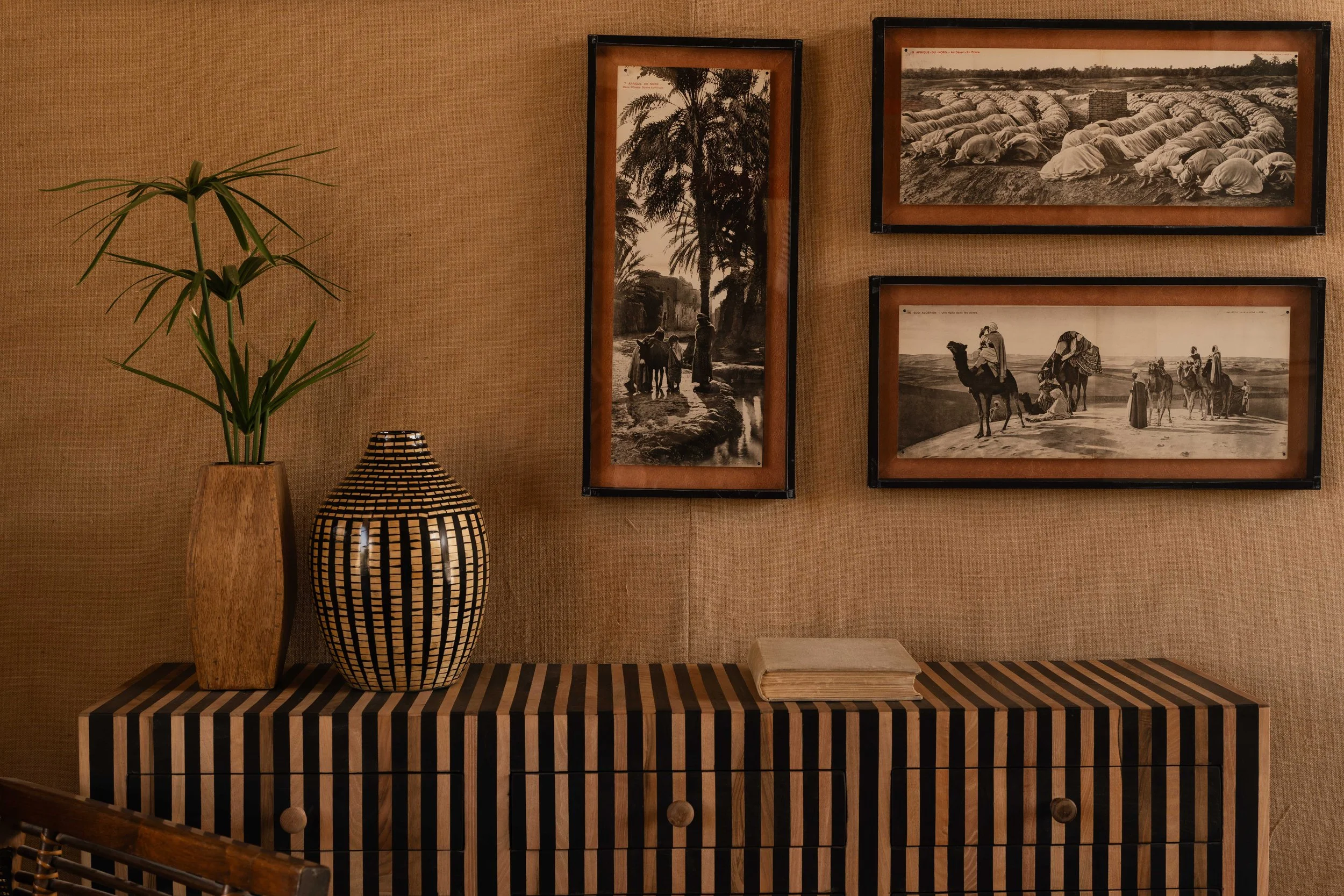
The suite is documented with a collection of old photographs from the Sahara and the Sahel. The atmosphere blends a sense of how things might have looked in the past with the comfort of contemporary living. Meryanne wanted the space to feel both grounded and tactile, using rough, beautiful fabrics, including a jute textile applied to the wall, contrasted with more refined elements.
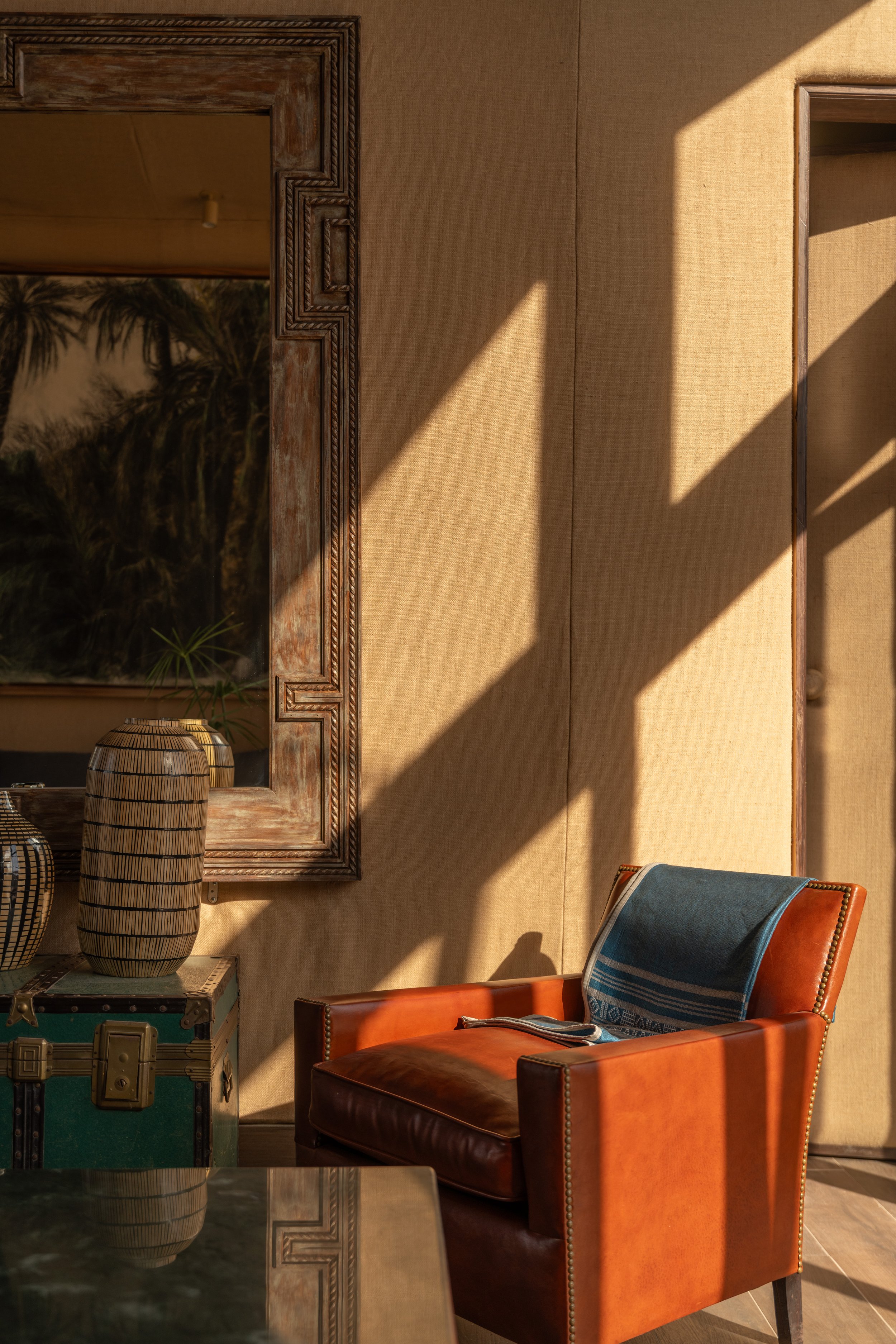
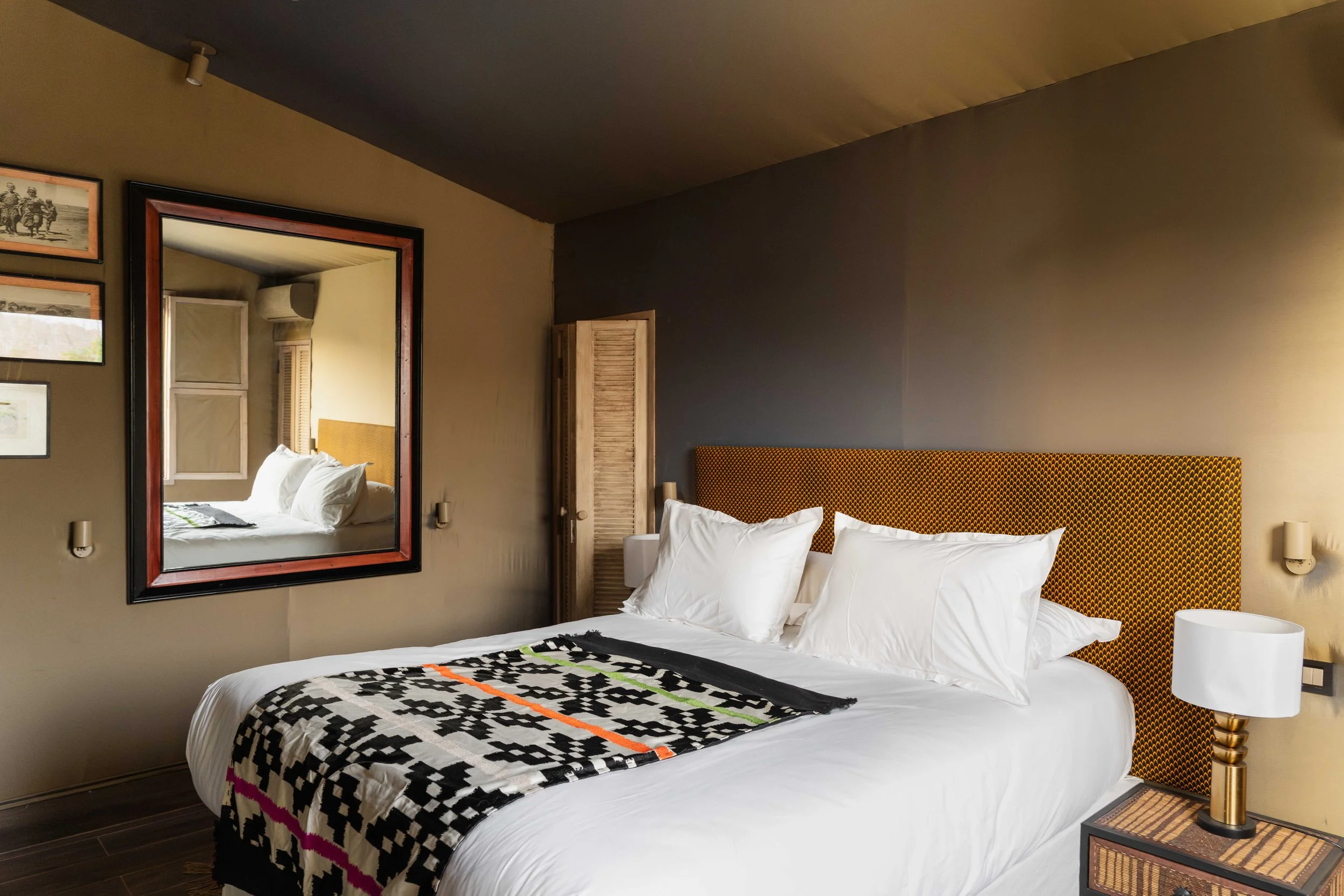
Among these are textiles by Aïssa Dione from Senegal, Indian silk curtains, and additional Senegalese fabrics. The lighting includes lamps inspired by those found on scientists’ desks in the 1940s. Meryanne designed the mirror with a combination of rope, large nails, and a red lampshade, which casts a warm and striking light at night.
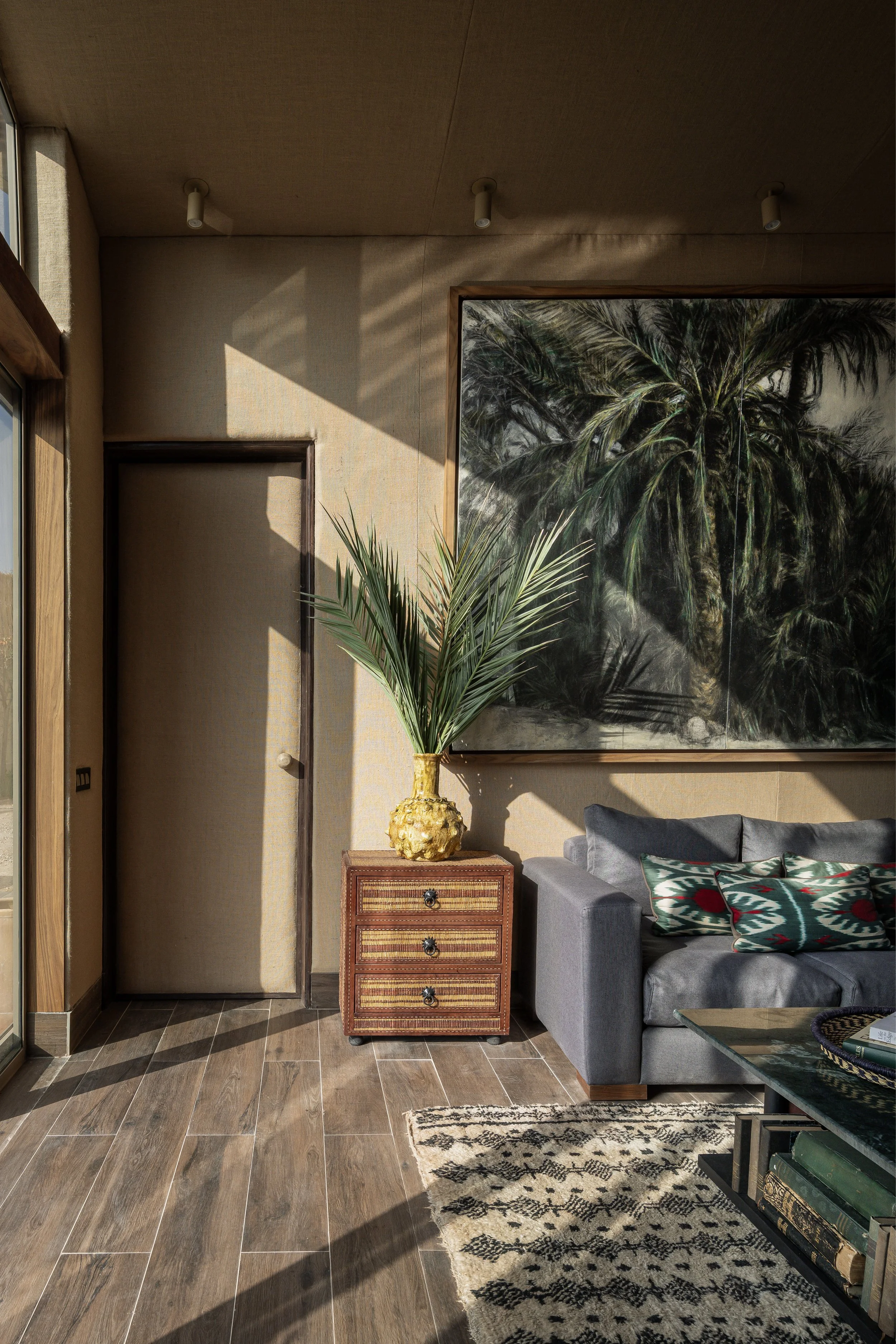
The books throughout the suite come from Meryanne’s family collection. Bound in old leather and significant in size and subject, they bring a strong sense of history and personal memory to the space. A painting by Philippe Deltour hangs in the salon, chosen for its connection to nature and its resonance with the surrounding palm grove. An old photographic print found in the south of France evokes Morocco through the distinctive shape of a traditional hat.
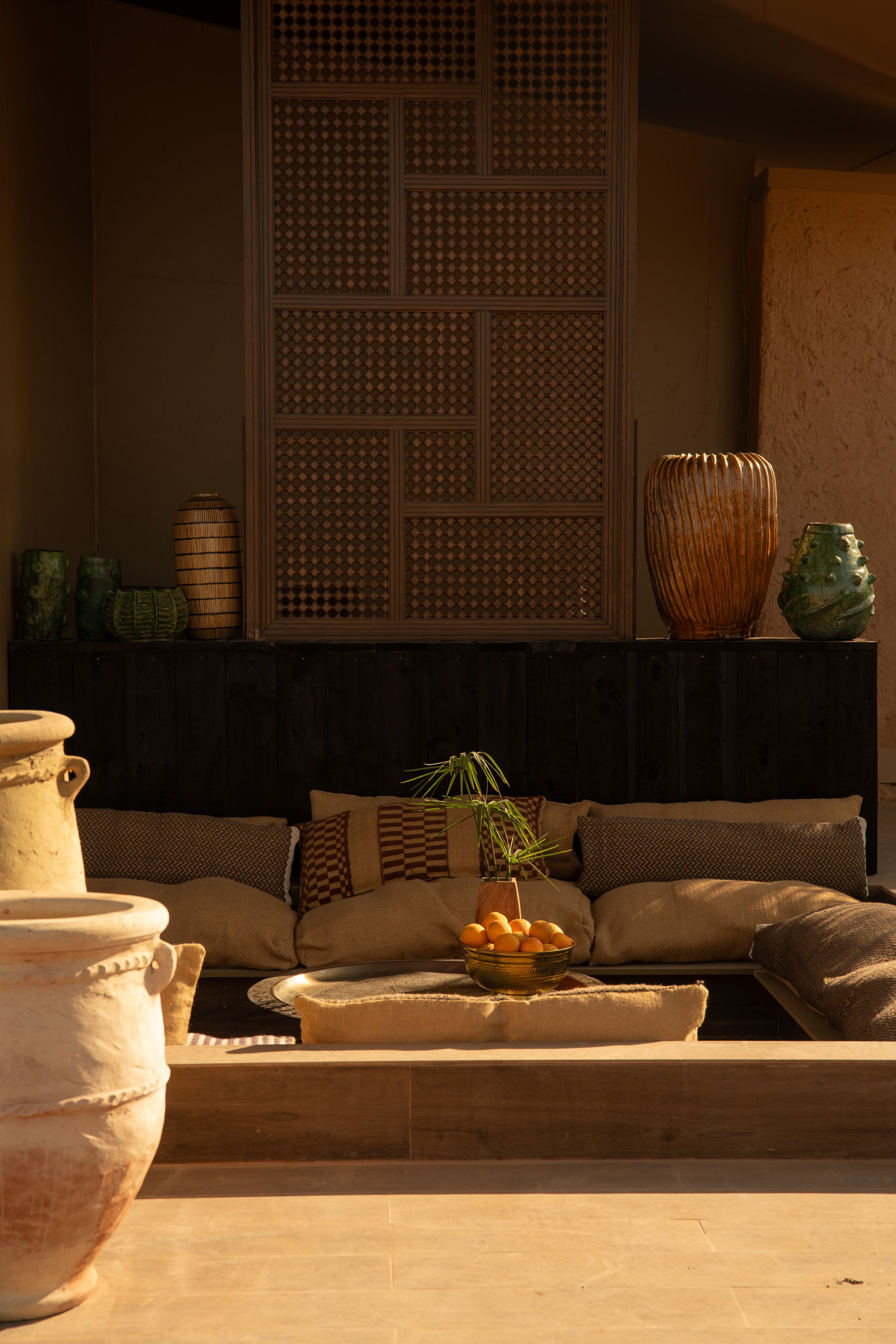
Meryanne designed several elements in the suite, including window frames and mirror frames, and introduced an old travel trunk, referencing both the spirit of exploration and the name of the suite. Wooden vases with carefully chosen patterns and colours complete the salon, alongside Mauritanian tables used as side tables.
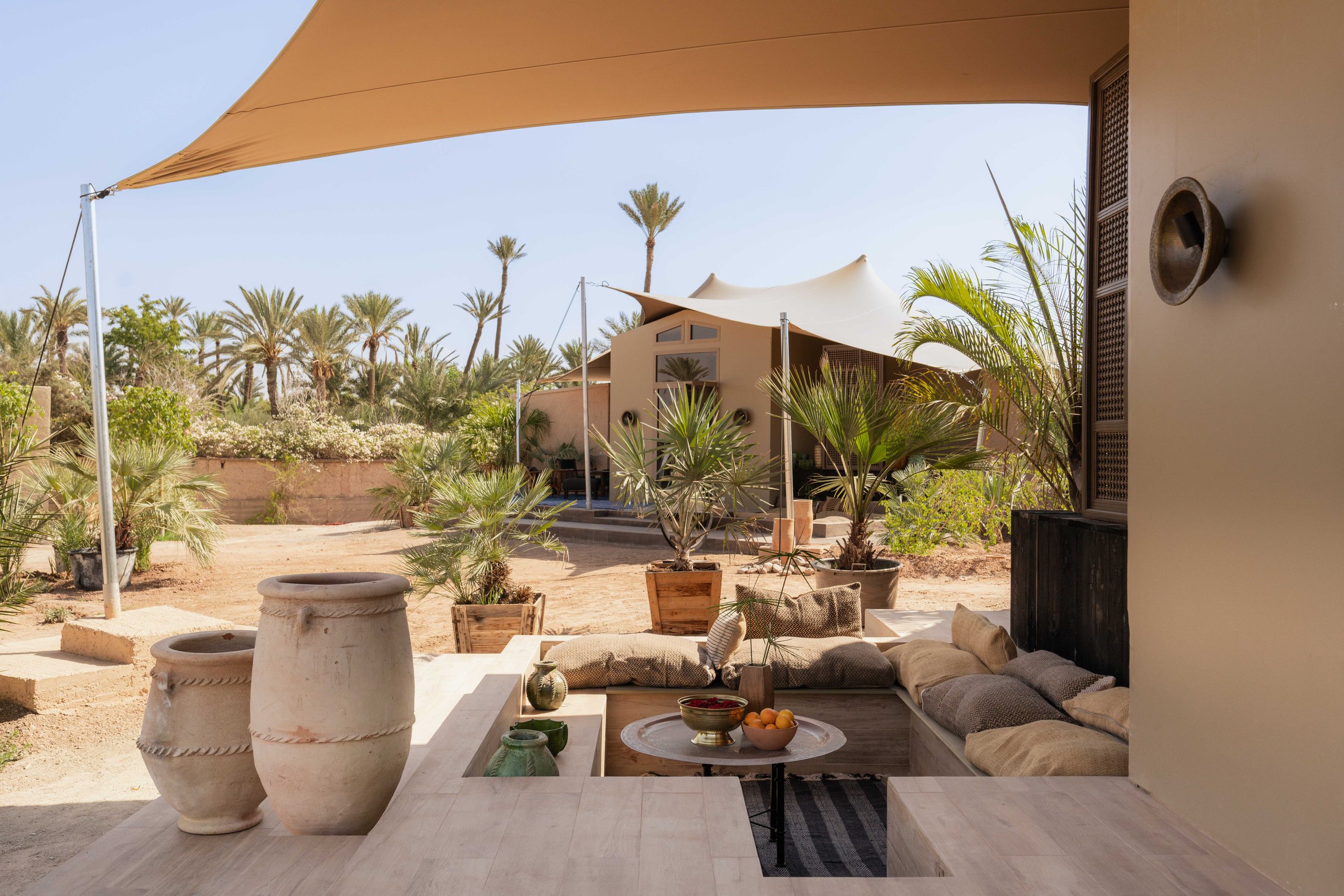
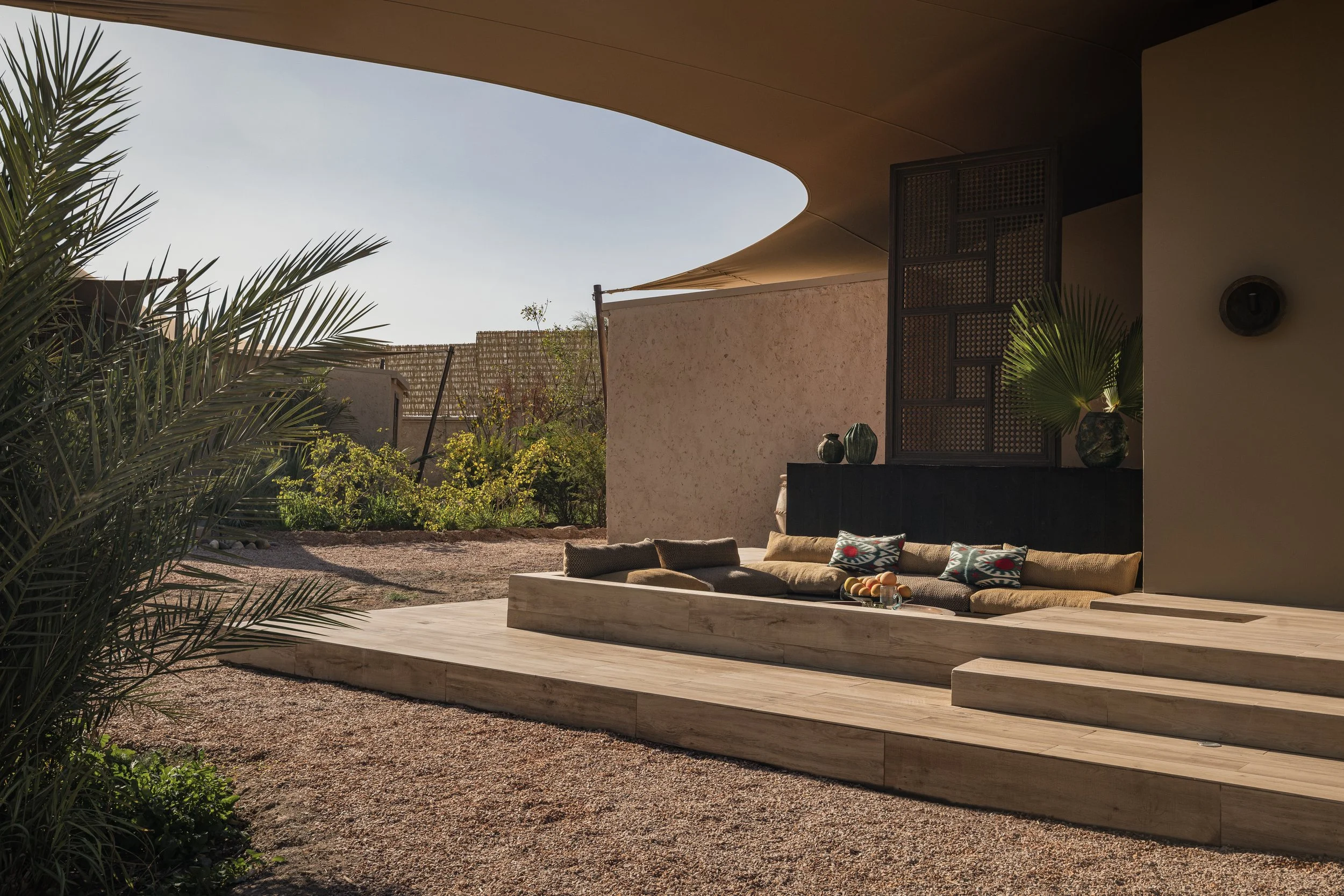
The Explorer suite opens onto its own private, salt-treated and heated swimming pool. The surrounding garden was designed by Gary and is inspired by plants favoured by Nelson Mandela.
One of the bedrooms features a striking, very old photograph of life near a river in Africa. The side tables are handwoven pieces from Mauritania. The bedhead textile comes from Togo, while the textile placed on the bed originates from Sierra Leone and was woven in Senegal by artisans originally from Sierra Leone.
In the bathroom, Meryanne introduced a mashrabiya-inspired screen with Amazigh patterns. She wanted the bathroom to feel unexpectedly luxurious, using green marble, fine woodwork, and carefully selected finishes. Rare alabaster pieces are presented like torches, set into plaster, and the ceiling is finished with traditional Moroccan reed.
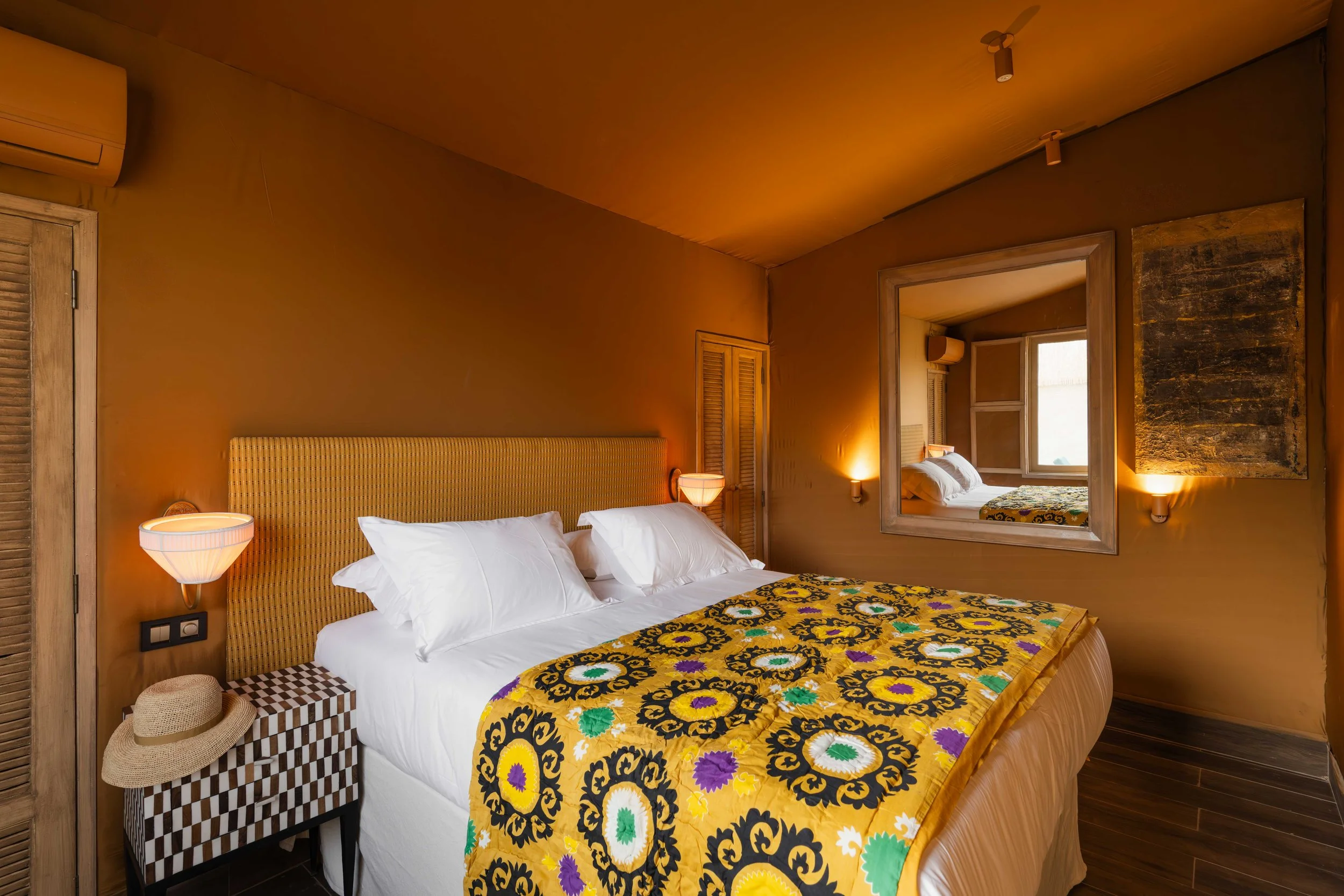
The second bedroom follows the same spirit with a different colour tone on the walls, leaning towards deeper tobacco shades. The bedspread comes from India and features a Suzani-inspired pattern, printed rather than embroidered, creating a contrast with the authentic Suzani used in the Punjab room. The layering of textiles remains central to the composition. An abstract painting by a French artist hangs in this room.
The second bathroom continues the same approach, using alabaster jars for lighting and maintaining the balance between craftsmanship and comfort.
Meryanne designed the Explorer suite as a place inspired by the idea of a highly refined scientist or explorer returning in the evening from long days of travel, research, and physical exploration, to a space of quiet sophistication, history, and warmth.